
1850-1860
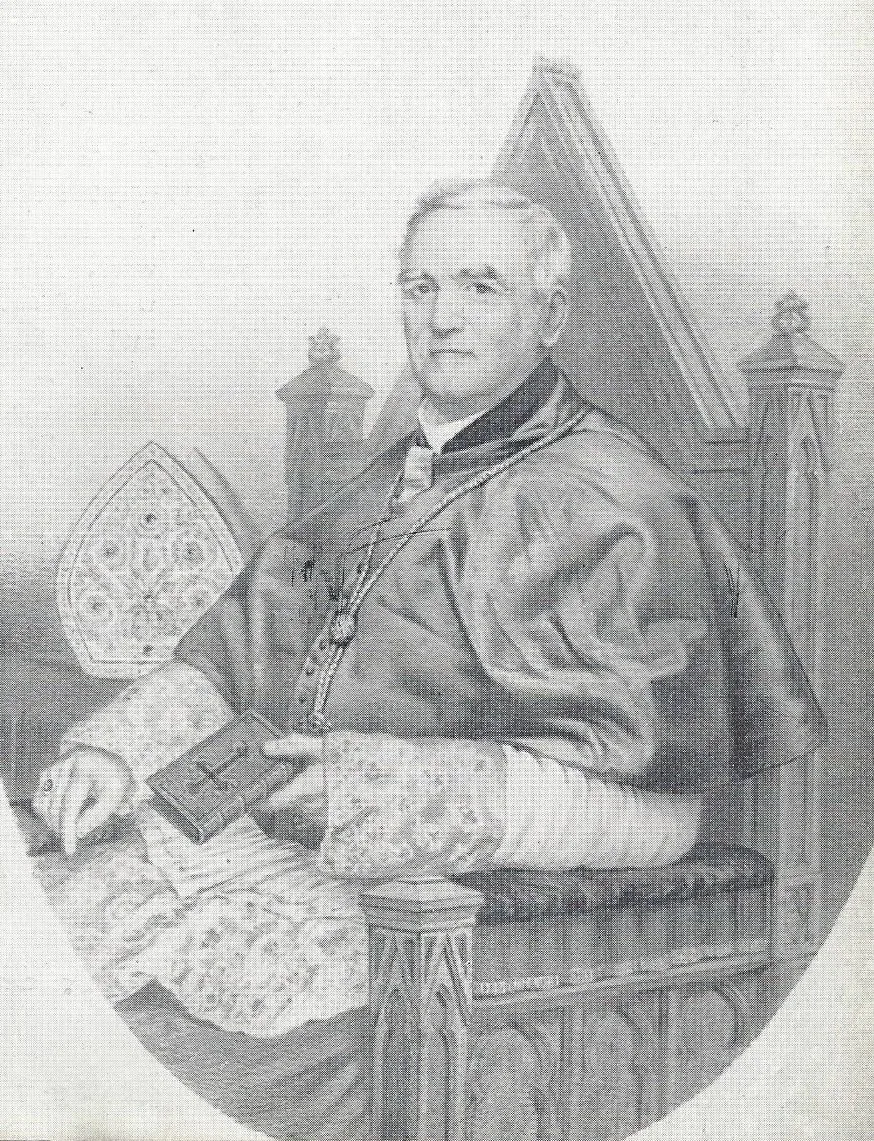
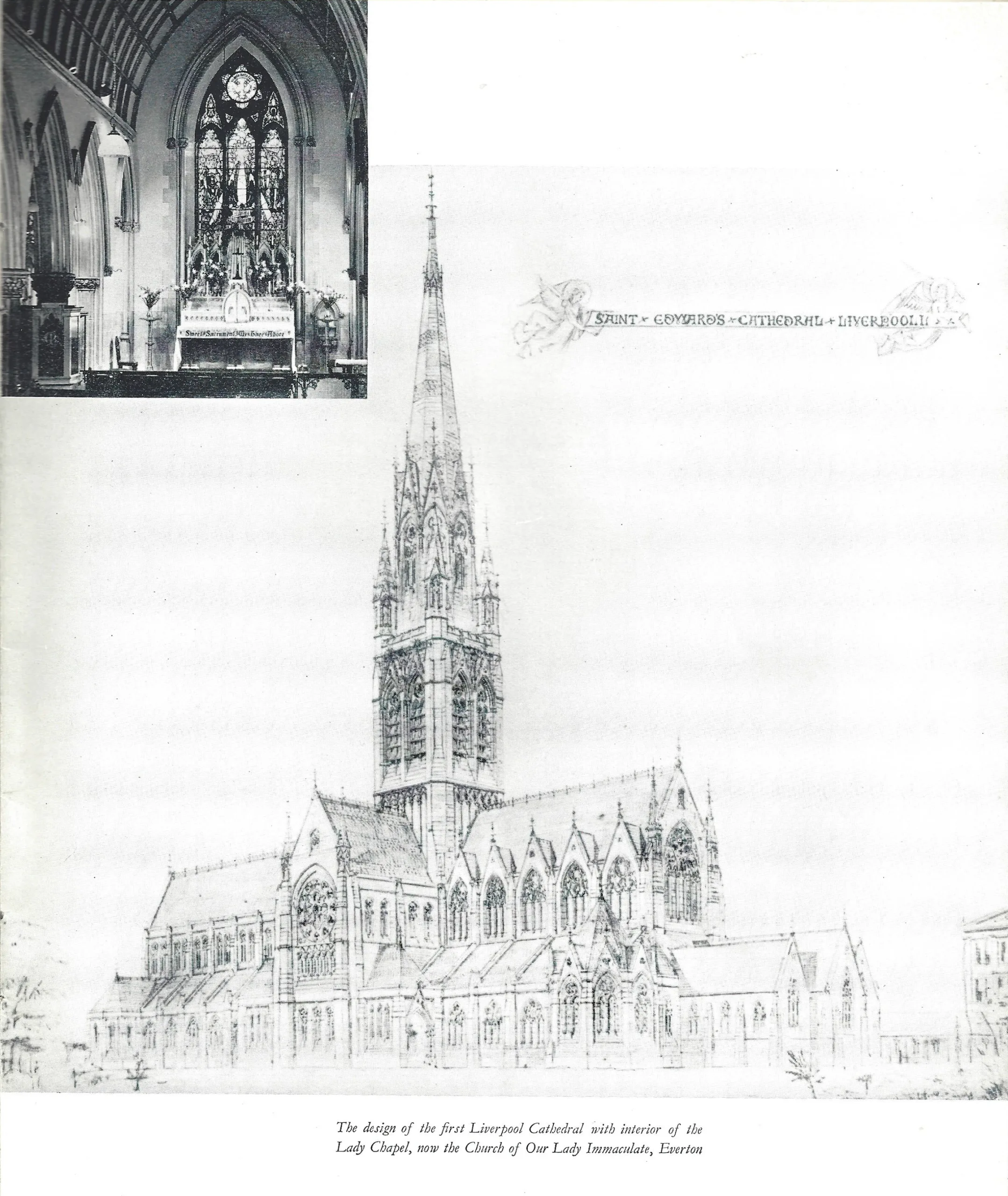
In the mid-19th century, Liverpool was a thriving port, handling 40% of the world’s trade. The city became a Catholic diocese stretching from the Mersey to Lancaster and Cumbria, with the Right Reverend George Hilary Brown installed as its first bishop. Plans were made for Liverpool’s first Cathedral, designed by architect Edward Welby Pugin in a Gothic style with a central tower and steeple.
1860-1900
During the potato famine, Liverpool became home to around 90,000 Irish immigrants, who would go on to shape the city’s culture. As the city grew, the Cathedral project was put on hold, and only the Lady Chapel was completed, later becoming a local parish church.
1900-1920
By the end of the 19th century, Pugin’s Lady Chapel was just one of 160 Catholic churches serving Liverpool’s rapidly growing population. In 1911, as the city and its Catholic community continued to expand, the region was made an Archdiocese, led by its first Archbishop.
1920-1930
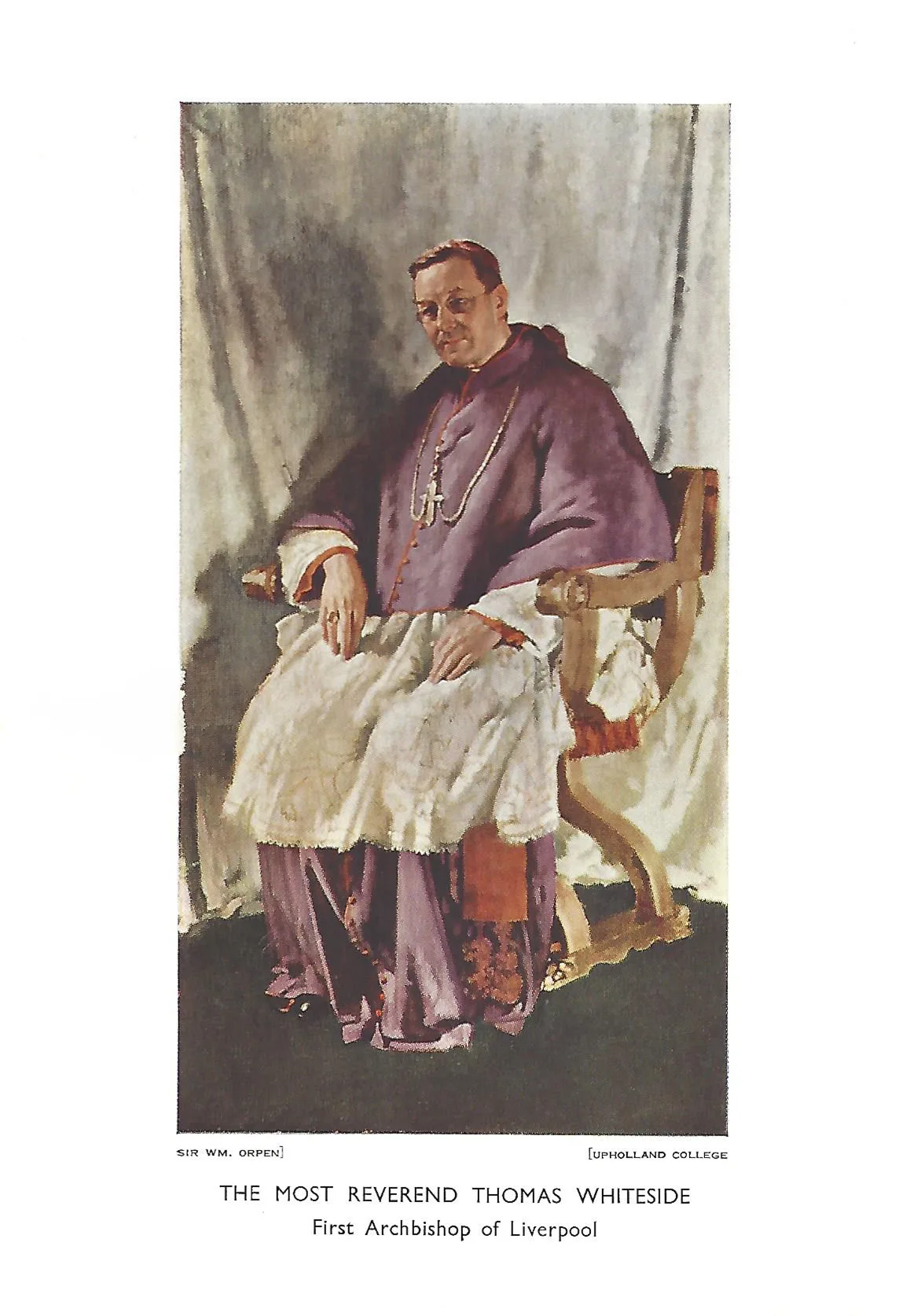
The ambition to build a Cathedral was revived in 1922, when Archbishop Keating launched a fund to construct a new cathedral as a memorial to his predecessor, Archbishop Whiteside. In 1930, the archdiocese purchased a lofty site on Brownlow Hill, once home to a sprawling workhouse and now the site of today’s Cathedral.
1930-1940
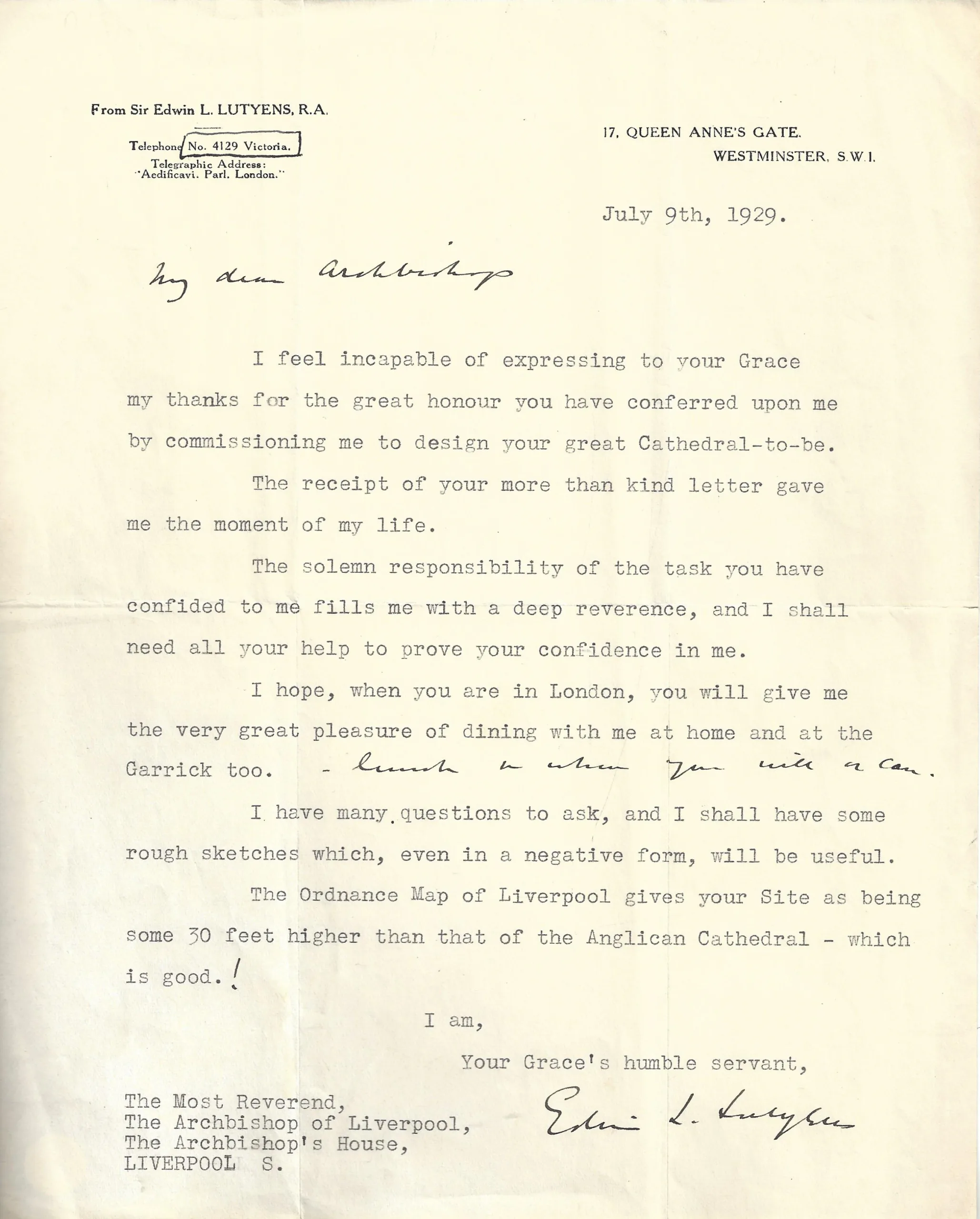
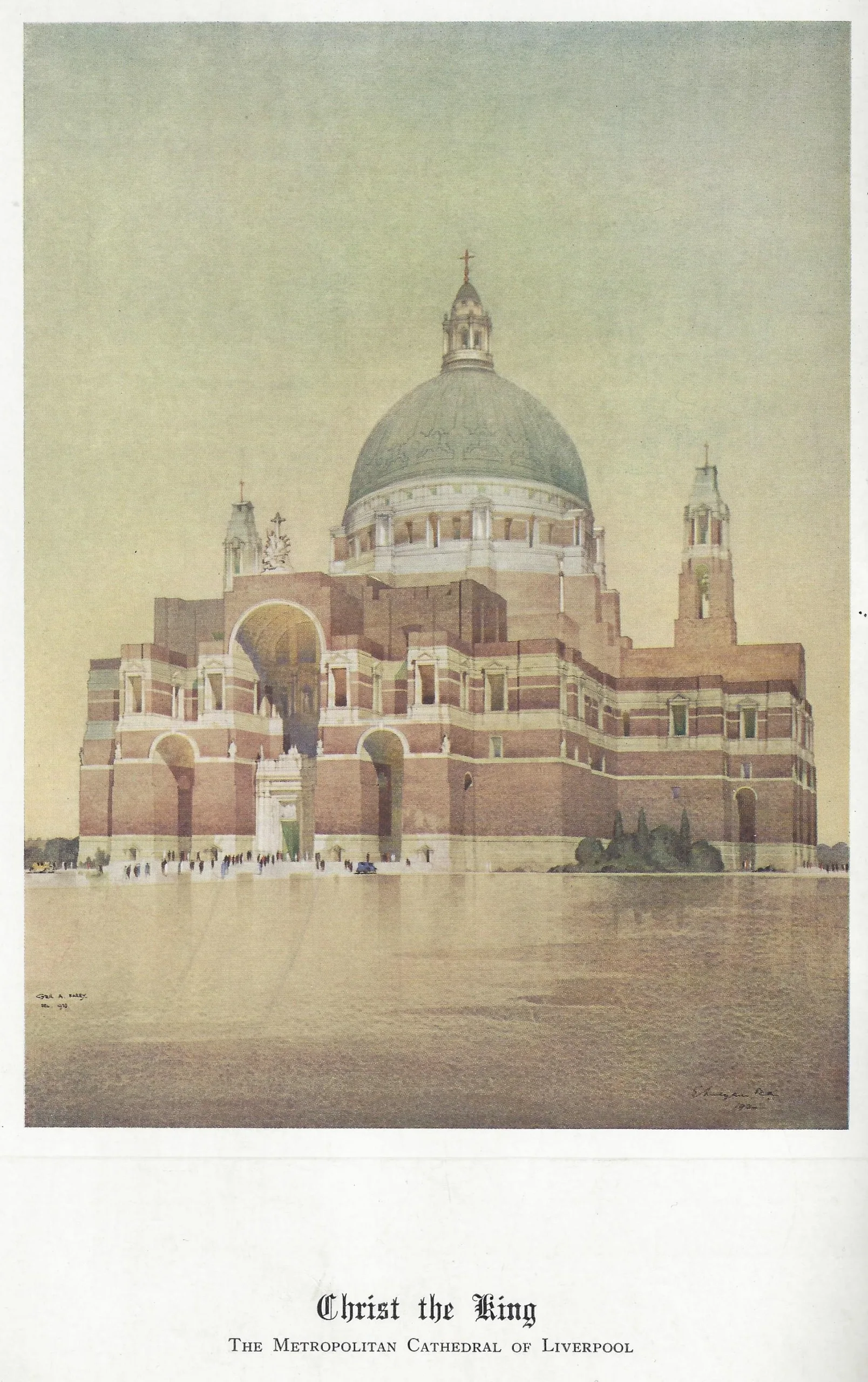
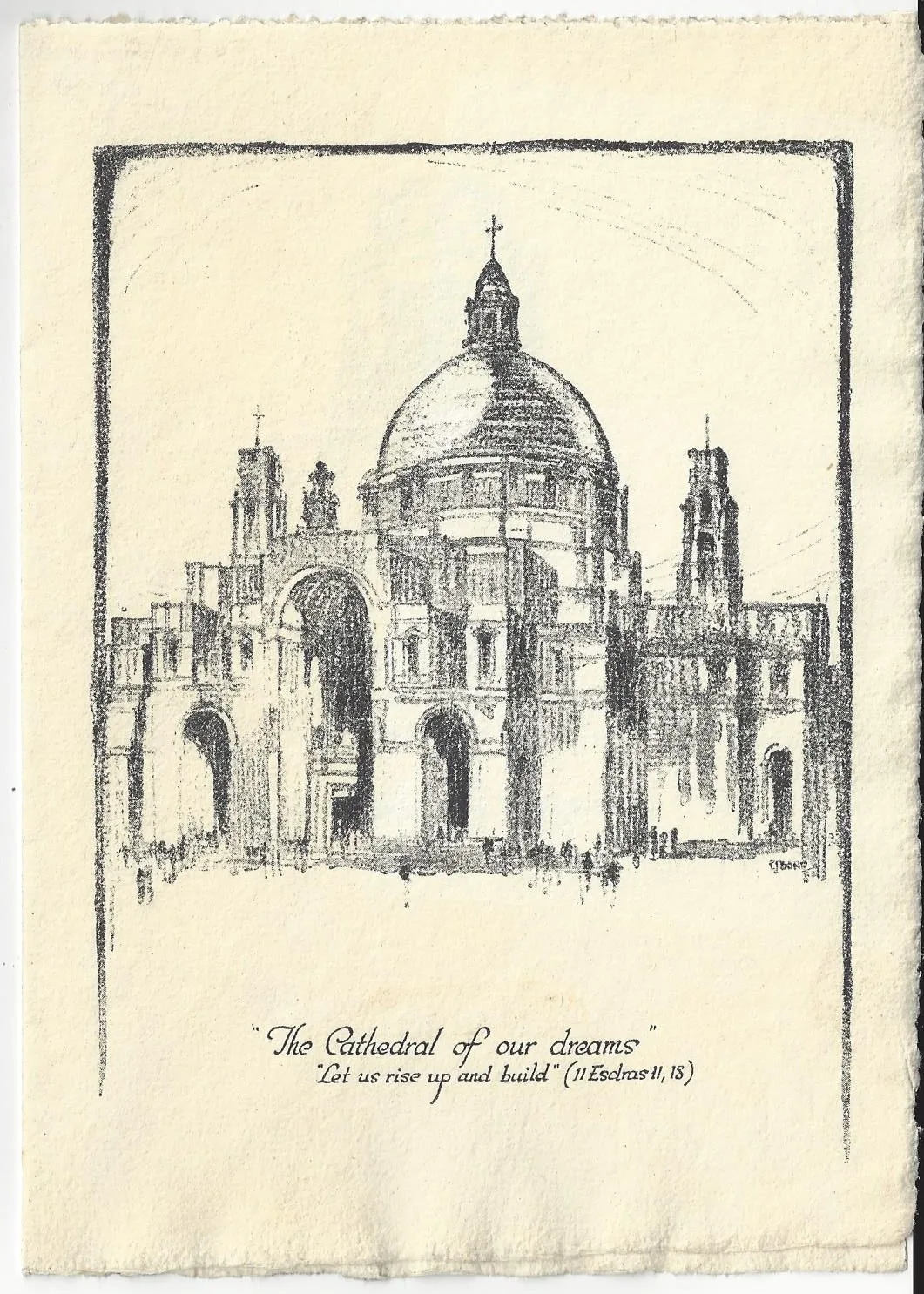
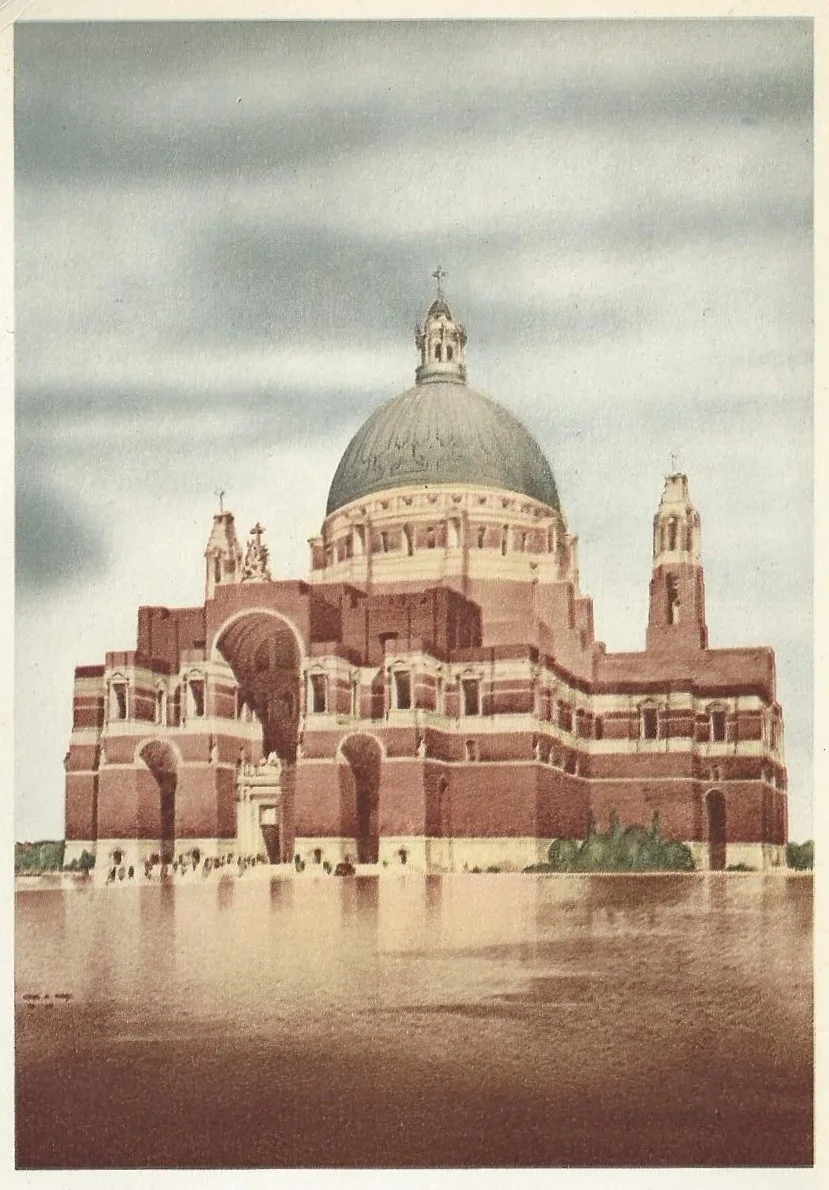
Sir Edwin Lutyens, one of Britain’s greatest architects, was commissioned to design what would be the second largest church in the world after St Peter’s in Rome. On 5 June 1933, the foundation stone was laid.
1940-1950
Work on the crypt halted during the Second World War. Sadly, Lutyens died in 1944 while his Crypt lay waterlogged and abandoned. By the 1950s, the cost of the Cathedral had risen to £27 million, and the war had left the city forever changed.
1950-1960
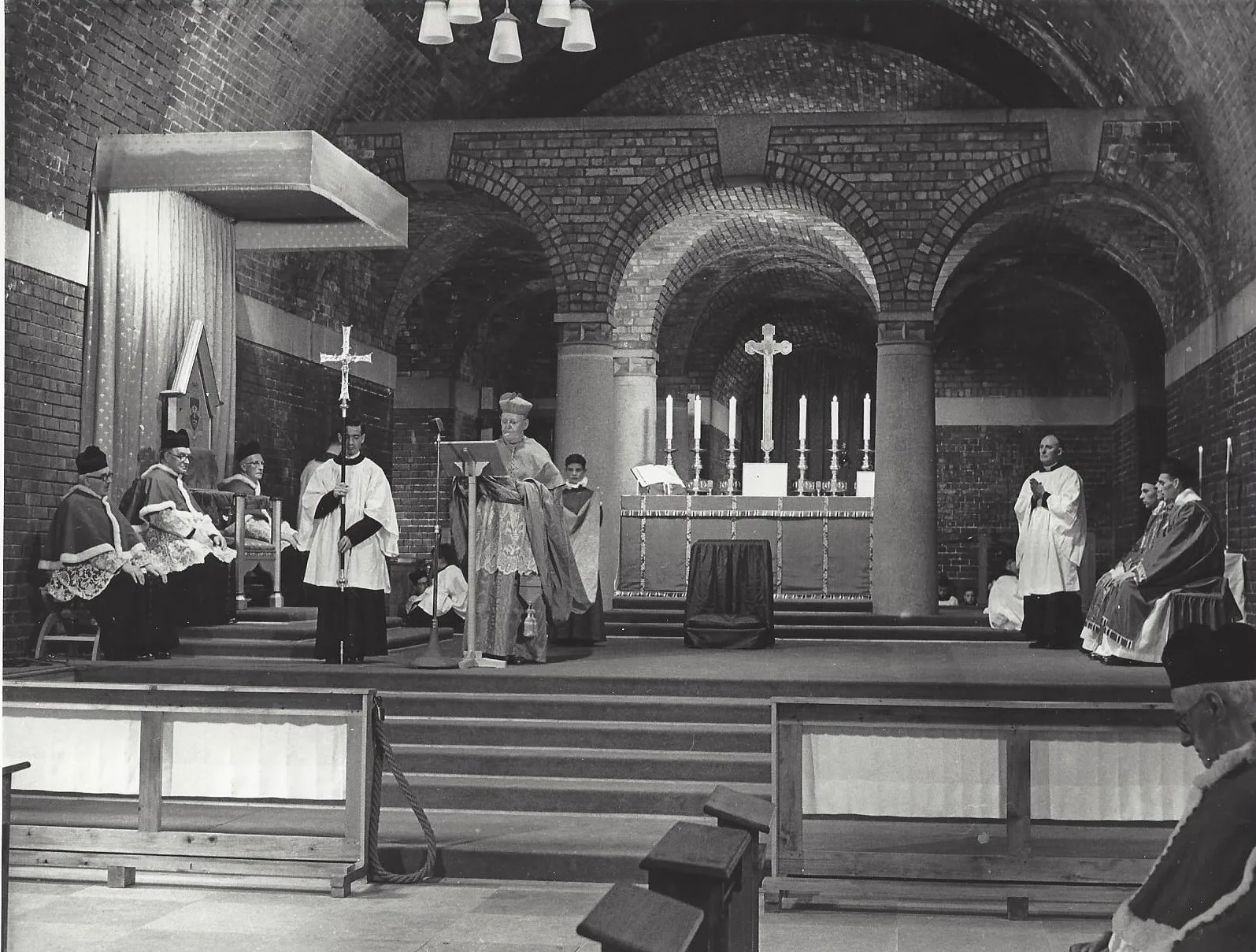
Sir Adrian Gilbert Scott was commissioned to scale back Lutyens’ design with a £4 million budget, but the project went no further. The Crypt was completed, offering a tantalising glimpse of what might have been, and a competition was launched to find a new design, attracting nearly 300 entries worldwide.
1960-1970
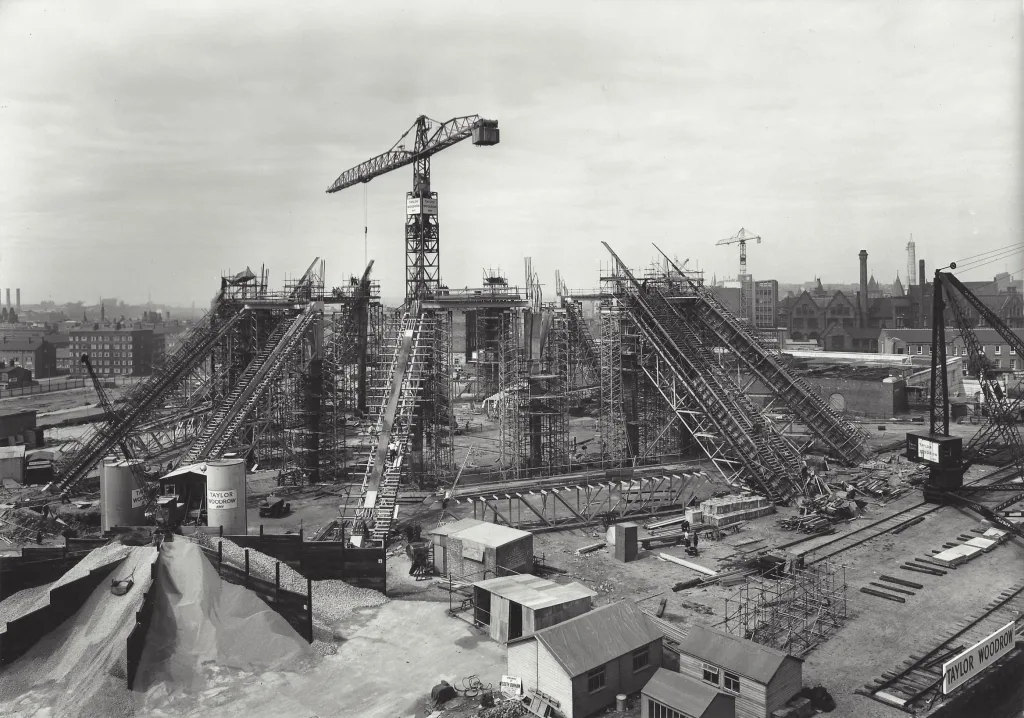
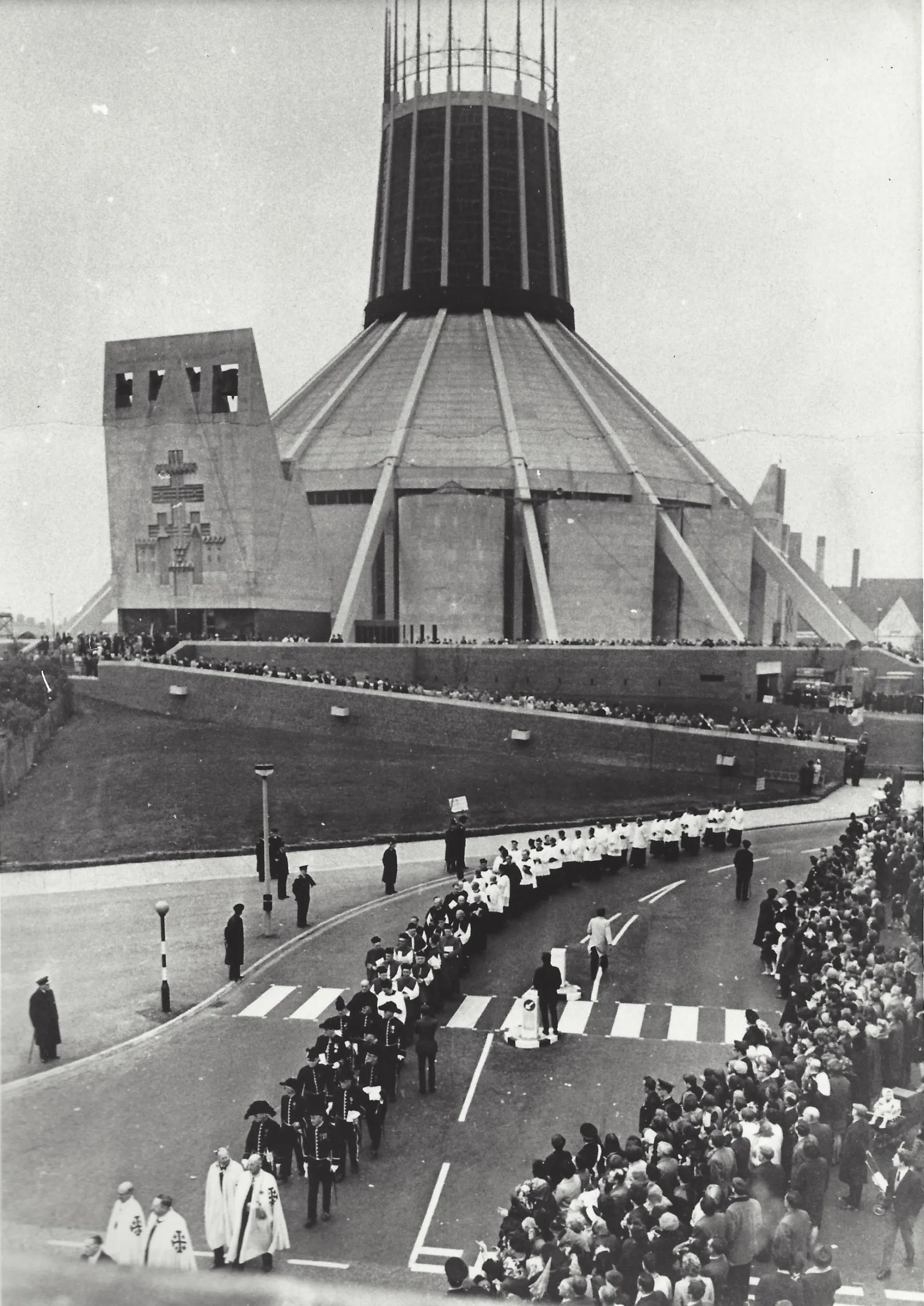
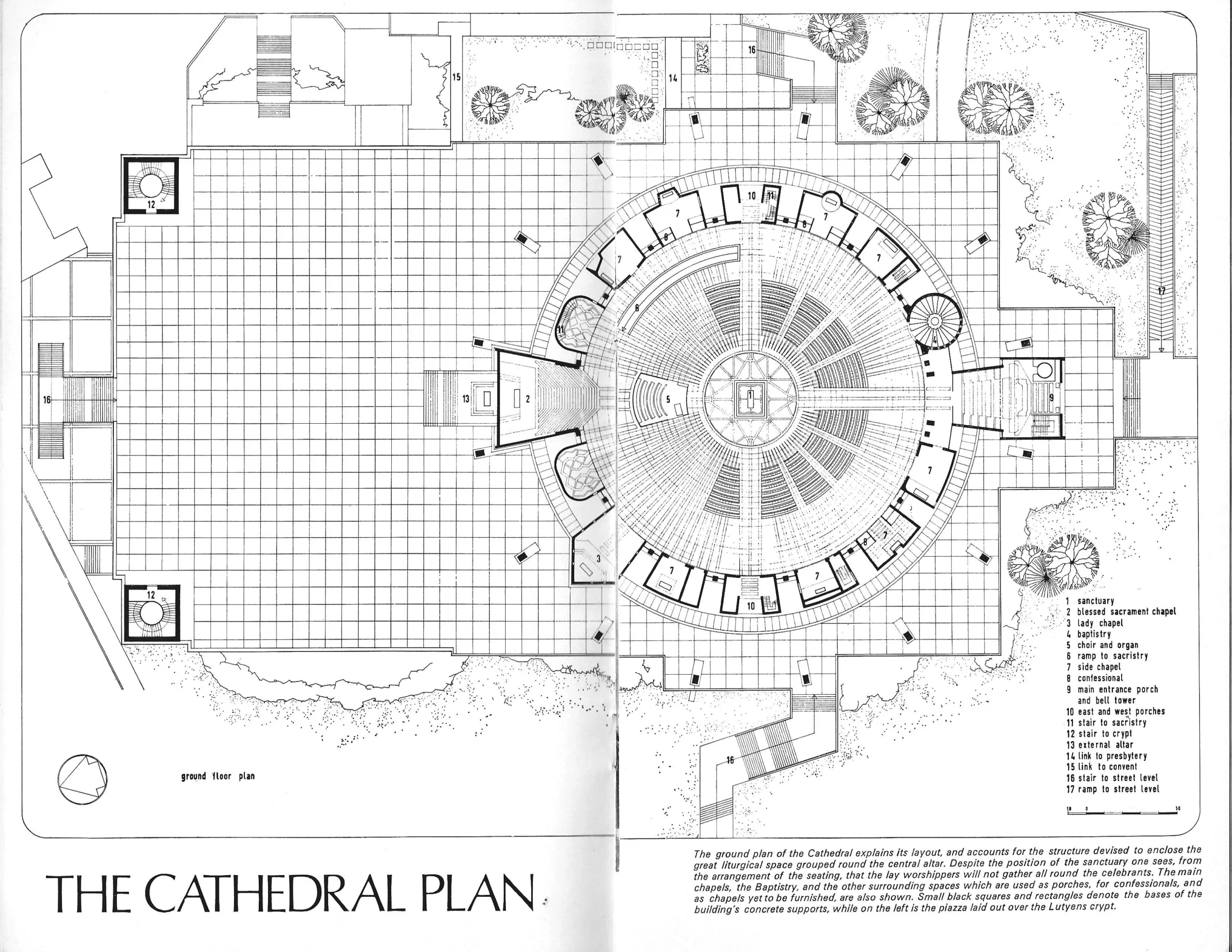
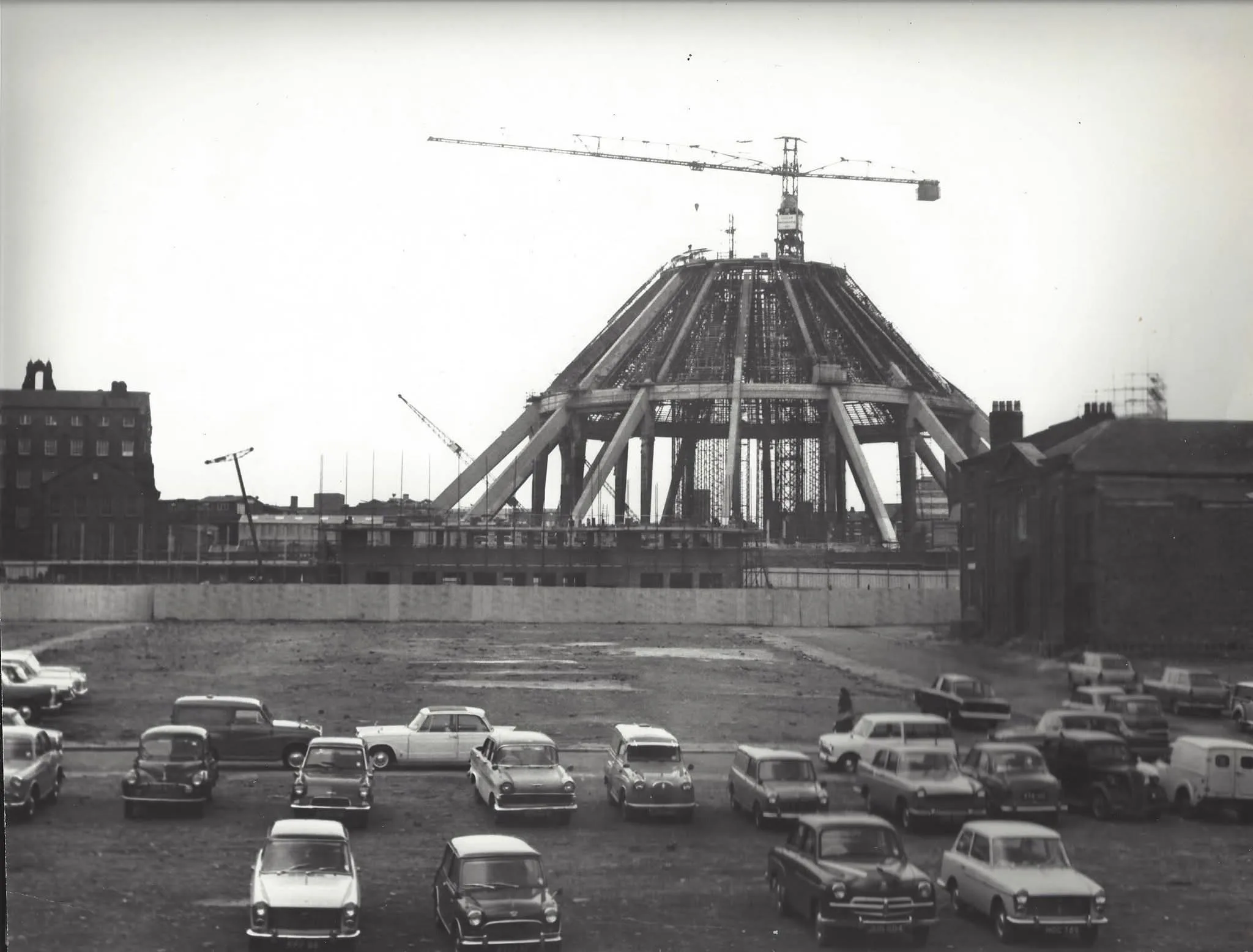
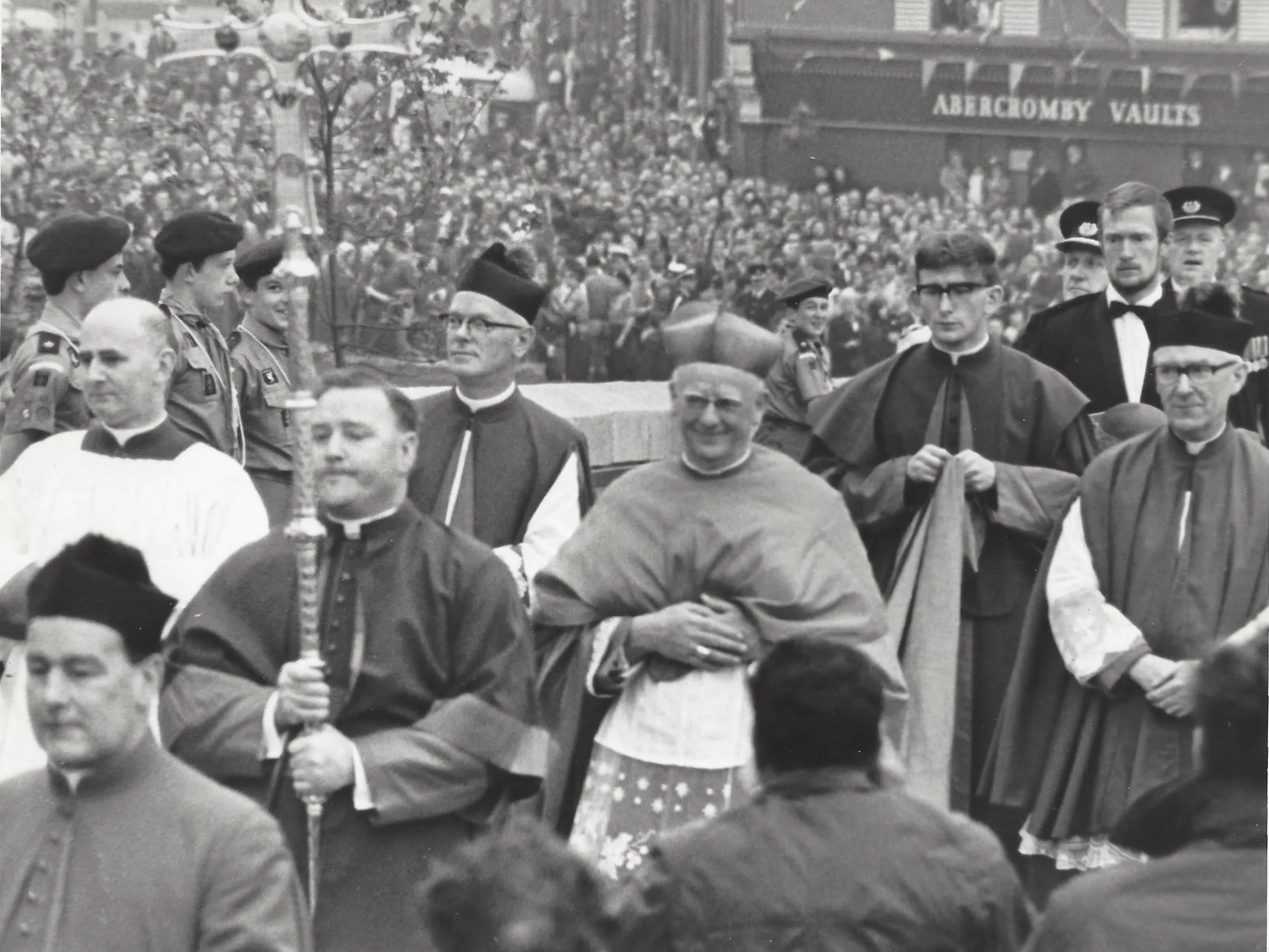
Sir Frederick Gibberd’s winning design created an inclusive Cathedral in the round, bathed in light from a soaring lantern above. Construction began in 1962, and five years later, the new Cathedral was consecrated on the Feast of Pentecost, May 1967.
1970-today
Our Cathedral is not only a famous Liverpool landmark but also one of the most striking modern symbols of Catholicism in the world, made Grade I listed in 2025. As Gibberd envisioned, its circular plan emphasises communal worship, making it a special and sacred space. It also serves as a hub for city celebrations and commemorations, and a beacon of hope and resilience for people of all faiths, creeds, and cultures.